
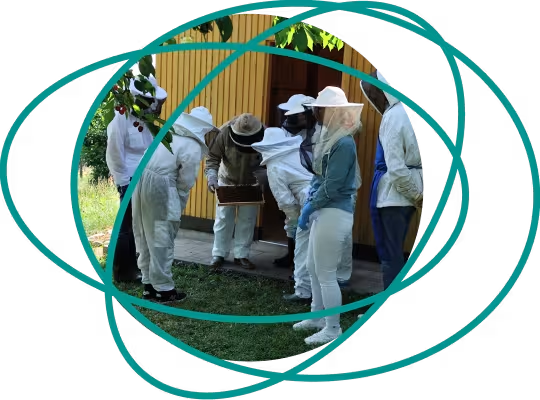
Study circles emerge wherever people feel the drive to learn something new, make a difference, and bring their community together. Their purpose is both simple and profound: to provide a learning space that is relaxed enough for people to feel safe and self-motivated, yet serious enough to lead to thoughtful, collective action. A study circle is more than just a meeting; it is a delicate web of relationships built around shared curiosity and common goals—both in learning and in practice.
Why do we gather?
We gather because a group understands the world more deeply and holistically than an individual can alone. A study circle provides the time and space for true immersion, allowing ideas to be tested and, above all, offering a secure environment for learning free from the pressure of grades or competition. Through their work, these groups uncover the developmental potential of their surroundings, highlight local challenges, strengthen the identity of their area, and build trust between people.

The enduring mission of study circles is to enhance the capacity of adults to understand, create, and collaborate. They encourage social, cultural, and environmental awareness while strengthening local communities through small but meaningful actions. In doing so, they provide a space where knowledge flows freely between generations, professions, and backgrounds—ensuring that learning remains a living, breathing, and accessible part of life.

The objectives of study circles have evolved over time. Initially, they served to broaden the range of adult learning opportunities and promote the democratisation of society. Later, the focus shifted towards making learning more accessible, motivating those who might otherwise be disengaged, and fostering the social inclusion of vulnerable groups.